
At 20, most young people often dream of challenging the world’s most persistent problems into a timed, slow, and flirtatious tussle. A degree, a white-collar job and some disposable money enough to reconcile the financial burden of starting a family. You might be a tad lucky if you are a planned child and do not acutely have to waddle the pinch of black tax. Some say enough money for a young person is being able to whimsically get shawarma; others believe you might be close if you can get by never checking your credit card balance after a shopping haul. Accolades and good titles are overarching aspirations, however. Ashley Maramwidze’s aspirations were more of a hop, skip and jump backed by the benefit of radical, early clarity. He always knew he wanted to be an entrepreneur, and university was the dilly-dally passivity he feared would only distance him from another business itch.
paNhari was offering the Passport-to-Success life skills training at the University of Zimbabwe through a partnership with the International Youth Foundation. He recalls signing up partly because the coaches were appealingly enthusiastic and otherwise because he was contemplating dropping out to pursue his dreams, and it felt immediately useful.
August 2015. Orientation day at the University of Zimbabwe. There was a table, paNhari, some spirited faces and a frenzied curiosity of learners eager to hop on the promised wild of campus living, in the air. He was particularly drawn to paNhari’s active engagement with social issues, community work, and the commitment to students’ personal development. “The classes were intense, and I remember being told to always be audacious enough to pursue opportunities I had access to,” he recalls, “the coaches talked me out of dropping out and helped me ground myself in ways I could build my entrepreneurial dreams better through school.”
When he joined the entrepreneurship class in his second year, he had grown some liking for learning, at least enough to keep him in school for longer. He attributes this to the community of peers he interacted with during the leadership program and the mentorship he received from the coaches. The business skills classes built into the foundational leadership he had developed earlier. “I learnt critical thinking from some key players in the entrepreneurial space such that it almost felt experiential. It was truly inspiring,” Ashley shares.
“We were trying to do things only graduates would normally do. paNhari pushed us to experiment with some of these big dreams from an early age, it was like a life hack, a cheat code.”
They say time is a social construct, but perhaps the universe has really gotten in tune with such widespread, ingrained delusion and when it sees fit, it conspires to align things. His parents had visited him and like every good child, he intrinsically wanted to find them proper accommodation, having travelled all the way from the village. There were other students, more parents in need of places to rest for the nights they came to the university. It came as a benevolent urge; timeous and so strong it inevitably felt like the needless thing to do. Using the skills he had learnt during the program, he easily hacked into the business starter kit, pitched the idea and got support to and ran up a few AirBnBs around the university. At the time, few people were averse to the idea of homestays away from home and truly, the good and bad of unique business ideas is that they are unique. He had to convince other students that their parents would always have homes whenever they came around and in as much as it did not immediately take off as he had expected, he had come too far to quit.
“You must love what you are doing, love it beyond profit. It is not an easy road, and there are breaking moments; they are part of the process. If you do not love what you do, it is easy to quit.”
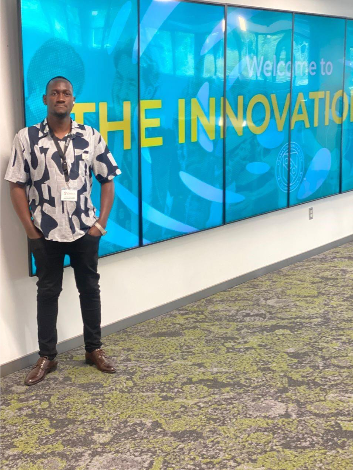
Soon after graduating in 2019, he combined real estate and tourism to start a new business. He was helping people book serviced accommodation, managed spaces for owners, and provided consultancy for others looking to get into the same space. He went back to the drawing board and strategized, this time furnishing his business profile with professional backdrops. He managed to convince more people around Chinhoyi to come around, and people started looking for him. He expanded to other universities not long after and took advantage of the traffic on graduation days. He was making a profit. After just a year in employment, he quit, committed to the business full-time in 2020 and ran it up until July 2025. He is now five years into business development, including three years navigating the post-COVID landscape which he recalls as having been the hardest to get by. He lost his source of income when people were confined in their homes during quarantine. His business took a dive. Sometimes the adrenaline rush gets a little sour even for serial, unrepentant businesspeople. His resilience and persistence not only saved him, but it also saw him through a deeply distressing period, and he somehow managed to keep his head above the water.
“I often refer to paNhari as one of the things I am most grateful for because it shaped me and trained me to be a better, resilient person. I have worked with many people, and I know it takes a few of them to inspire and push you to keep doing better.”

Ashley feels he is a better leader now, something he alludes to paNhari’s network of experts as having been a pivotal cradle. “paNhari connected me to great people who challenged me to be better, learning about managing money and working with communities of people.” The little dream of creating a business to earn him a living has grown into a marvel of a startup, supporting other young people. He says paNhari gave him a solid foundation in his formative years, and he has ridden on that since. “The feedback I get from people I work with affirms my belief that I met the right people. Trying to get the best out of me, giving me chances to fail and learn, Donald and Phil are the reasons I lead with empathy, showing up for people beyond their workplace capacities. I try to get the best out of them.”
Ashley recently moved to New York to pursue a master’s degree in business analytics at Clarkson University.