

Clive Nyapokoto and the Vermi‑ Aquaponics Revolution
Africa’s agrifood transformation is one of the continent’s greatest opportunities to combat the climate crisis through resilience-building. Green-powered digitalization of agriculture is perhaps one of the most promising pathways to boost resilience, and it is already revolutionizing agroecology. For Clive Nyapokoto, the urgency of growing more food demands action beyond conscience. From a young age, he always wanted to be an entrepreneur and constantly explored ways he could channel the realities of a rural upbringing to transformative change.
He first pitched his idea to paNhari while studying at The Harare Institute of Technology in Zimbabwe. At the time, there was a general overbearing perception that innovation had to explicitly be fast technology, either applications or artificial intelligence. When paNhari expressed a liking for his vision and thought it was interesting enough to step it up, his life took an unexpected turn.
“paNhari was the first to see potential in my idea and by virtue, it gave me hope and the belief that if there’s people out there that see this as a brilliant idea, then I must push it to the furthest level possible.”
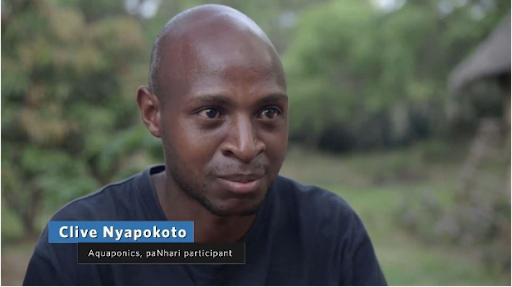
He went through the entrepreneurship incubation and acceleration program that was being offered by paNhari at the University of Zimbabwe, and later, the complementary leadership classes. After completion in 2014, paNhari offered him a grant to build a working prototype in his rural community, Marondera, coupled with additional mentorship support.
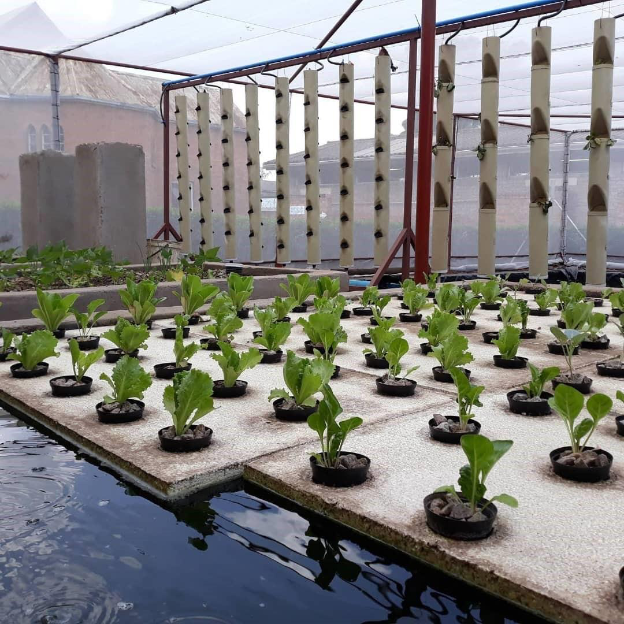
Clive designed a Vermi‑Aquaponics (VA) System; an integrated, soil‑less farming system that combines aquaponics, vermiculture, small livestock, and ICT technologies. Worms turn kitchen and paper waste into organic fertilizer that feeds fish and chickens; fish waste irrigate plants; sensors remotely monitor and control the entire loop. By incubating his innovative idea, paNhari enabled him to scale the system from a backyard experiment to a large‑scale model, with the first major installation in Marondera’s Svosve communal lands. The project has since expanded to serve over 800 farmers and attracted adoption by hotels and urban growers. They now offer consulting, setup, and sell products ranging from compost, honey, and fish.
Clive’s innovation has earned global recognition. In 2016, he won the Energy Globe National Award, one of the world’s most prestigious environmental prizes. Judges praised the VA system as a scalable solution for climate‑resilient agriculture. The following year he received a Certificate of Excellence at the ITU Telecom World Awards, further validating his work on the international stage
“This project is the future of farming, especially in ever‑changing climatic and economic environments,” Clive says. “It will increase food productivity for urban and rural communities alike.”
The business has supported over 5000 people in Zimbabwe as a source of livelihoods, through products sale and collaborations. Clive’s story is a testament of how youth-led ideas can evolve into practical, scalable models that contribute to climate-resilient livelihoods and sustainable food systems with the right ecosystems of support. By supporting young innovators, paNhari enables solutions that reimagine production, distribution, and consumption patterns. It further demonstrates why investing in youth-driven transformation is both necessary and impactful.
“Donald and Phil, paNhari’s co-founders, kept checking on me even long after we had completed the project, telling me the sky is the limit and supported me to access more opportunities to scale my business,” says Clive.