

By Phil Mlanda, Co-Founder at paNhari
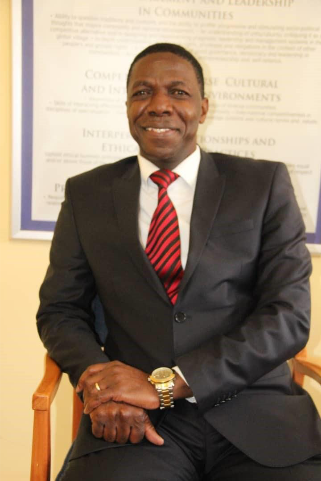
This article is dedicated to Dr. Munyaradzi Madambi, a founding supporter of paNhari and a tireless advocate for students. His life reminds us that true leadership is measured by the care we extend to others.
In 2015, a professor from the University of Minnesota visited paNhari, our young organization, and spent a week with the university youth we were training in Harare, Zimbabwe. Afterwards, he wrote in his report that “paNhari has developed systems of disruptive pedagogy that other higher learning institutions should replicate.” My first reaction? What the hell do those big words even mean in plain English? Here is our story:
During my years as a computer science student at the University of Zimbabwe, I worked part-time on the campus Web Team, maintaining the university’s website and developing systems that directly improved student and staff experiences. We built an academic results platform that gave students private, instant access to their grades—replacing the outdated notice-board lists—and a VoIP system that reconnected faculty and administrators when the campus phone network failed. Shout-out to Thomas Tapfumanei and Tawanda Kembo, whose collaboration made these projects possible.
Working on the Web Team showed me what real problem-solving looked like—fast, collaborative, and focused on tools people actually used. That contrast made my coursework feel even more outdated; we were still learning languages like Pascal while the industry had already moved to frameworks such as .NET. It was like practicing on a typewriter while the rest of the world had switched to laptops.
The bigger issue, though, was how we learned. Knowledge flowed one way – professor to student – leaving little space for collaboration, iteration, or experimentation. Instead of buzzing, hub-like spaces where ideas could grow, the classroom felt locked in an outdated model that had not kept pace with the world outside.
When I graduated in 2010, I knew I would get a job because I had the privilege of a predetermined path I was set on. At the time, the country was grappling with hyperinflation, and unemployment rate of over 75%, an all-time high such that being able to land a role amidst the brain drain was a big deal. However, I did not feel it was enough that while I had a defined path ahead of me, my peers were getting caught up in the transition. In Maya Angelou’s words, “none of us can truly be free unless all of us are free,” and in this case, from the systemic deficiency of education in Zimbabwe at the time. That kind of privilege typically brings responsibility. I wanted to do something about it, something that would somehow fill the skills gap and bridge between school and the job market. Graduates typically needed life skills to help them navigate the complexities of life beyond school and find ways to turn what they learned into livelihoods.
Around the same time, another student was tackling similar challenges from a different angle, working with marginalized communities and experimenting in the lab on organic fertilizer. Enter Donald Bodzo. It wasn’t just his sense of humor that stood out, but an unmistakable aura that his life’s purpose was bigger than himself. Naturally, we became friends.
The realization that more was needed beyond classroom teaching pushed us to act. Together, we rallied our friends around a shared vision of helping students carve meaningful career pathways. Our skills complemented each other: my technical background and ability to build relationships with partners, and Donald’s unmatched gift for execution and business development. He doesn’t talk much, but he has always been the one to turn vision into reality. In my career, he remains the finest executor I have ever worked with, humble, selfless, and relentless in closing the gap between ideas and action. Life rewards the doers, and Donald embodies that truth. We created something outside the coursework that sparked both passion and creativity. We held spaces for conceptualization and design through conversation. We had a unifying purpose. paNhari was born from the reimagination of young people’s potential and position in national and regional development.
In 2015, we went back and introduced accredited courses on leadership and entrepreneurship at the University of Zimbabwe, my alma mater. We were allocated the 3:00PM slot on Friday, a time when most students would rather be off campus starting their weekend than sitting through another learning session. I fought hard to have it changed, but the faculty could not extend it any further.
Well, we went ahead anyway and unknown to us, we were in for a surprise.
The university culture around us had long normalized hierarchy: the professor lecturing, the students listening, the invited guest expected to be a CEO, an academic, or someone who “proved” themselves through conventional measures of success. Our classes were designed around dialogue. We hoped to redefine how knowledge-sharing is done, away from the top-down, hierarchical learning to peer-led conversations. We brought in instructors, many of them students themselves who invited conversation. In a region where accent and fluency in English often creates invisible social barriers, we built a space where those barriers naturally fell away. It was a safe space where everyone, regardless of background, could share on the premise that they brought with them their lived realities. We created a space for honest conversations. True to that, everyone had something valuable to say.
There was a session where a woman who worked as a motor mechanic on Kaguvi Street – thriving in an industry dominated by men – came to share her journey. She wasn’t the kind of guest the faculty typically approved of, but she lit up the room. Her story was raw, unapologetic, and profoundly resonant. Her journey was not just her own, she held up a mirror for every young woman in that room who carried aspirations that society would not immediately endorse, as if they ever needed its approval. It was life changing.
By the second semester, that dreaded 3:00 p.m. slot had become the most anticipated class of the week. The room was full. Students who had taken the class before came back just to sit in. In other cases, some lined up outside the windows, peering in, just to listen in on the conversations. I had never seen anything like it in all my years of university life. My deepest appreciation to Dean Madambi, to whom I gave a hard time for allocating us the slump time, but in truth, it was important enough that we got it at all.
We later scaled it up to a more structured form of learning around leadership, life skills development, and entrepreneurship. Our model implored students to approach problems with critical thinking rather than linearity. It complemented technical learning with communication, leadership, self-awareness, and business development skills that sought to build interpersonal capacity and allowed students to apply their knowledge collaboratively and creatively.
“The coaches always reminded us to have self-confidence, to boldly dream and be brave in actualizing those dreams,” says Ashley Mwaramidze, one of the paNhari alum currently pursuing Business Management at Clarkson University.
I remember telling Donald back when this was just an idea that our definition of success would be simple: if even one person ever said, “What you built changed the course of my career,” then we would have made it. Today, I’ve long lost count. We have trained over 4,500 students, mostly in Africa but also through 14 universities across Latin America, Europe, and Asia. Many have gone on to improve their communities through innovation and entrepreneurship. Sometimes we only learn of their journeys by chance, like during an interview with our now Program Manager, Samantha Katsande, when we discovered she had once been a paNhari student.
Truth is, it was not because we were expert curriculum designers. It worked because we created a space where people could be themselves and belong enough to hold honest conversations, where they could talk about what mattered most and share knowledge. Leadership happened around care and the nurturing of the person. It truly took a village, and while I cannot name everyone in that village, I must begin with Dean Madambi. Alongside him were so many others who helped register the organization, reviewed proposals, volunteered early, offered office space, and so much more – Paul Chimombe, Blessings Chiwandire, Tracy Bodzo, Tracy Maguze, Lorlene Hoyt, Simbisayi Mlanda, Amy Newcomb, Jennifer Catalano, Marla Chaneta, Takawira Kapikinyu, Ross VeLure Roholt, Patrick Motsi, Sebastian Zuze, Kudzi Mubaiwa, Tsitsi Mukono, Caroline Wallace, Kim Kujinga, Charles Phillips, and Irvine Chimedza. Their fingerprints are all over the foundation of paNhari.