

Donald Bodzo, Co-Founder at paNhari.
paNhari leading and epitomizing values-based leadership
“Sometimes you don’t know you’re a leader until someone tells you that you are,” might sound like a deriding confession from a well-decorated strategist countlessly referred to as some of Africa’s finest visionaries. It is largely true, however, because paNhari’s rating on the resonance scorecard, especially its cultural attunement with the realities of Africa’s most versatile population, teeters on the highest end – undeniably. Perhaps the blur is an effective way of reinstating the need for sincere collaboration, backing, and enabling youth development. Mushandi, Donald’s middle name translates to a workaholic, and it’s easily the most glaring reputation of paNhari’s co-founder from which the organization’s legacy sits on. It is an evocative testament of a striking commitment to leadership and youth empowerment.
In 2005, as a first-year student at the University of Zimbabwe studying a Bachelor of Honors degree in Environmental Science, he was on the look for something beyond the confines of the classroom, a way to get in touch with community realities in Zimbabwe. Influenced by friends from high school, he joined the Students in Free Enterprise (SIFE) global program, now known as ENACTUS. The program’s mission to bring students together to design and implement community-based projects resonated deeply with his growing curiosity about practical, people-centered development. By the time he was graduating in 2008, he was leading one of the program’s initiatives, a project that worked directly with rural farmers at a time when Zimbabwe was facing severe economic hardship. Farmers across the country struggled to access basic agricultural inputs, and in response, he and a team of colleagues from the Faculty of Agriculture developed an innovative, low-cost solution: organic fertilizers made from cow dung and other locally available materials. The approach not only addressed the issue of accessibility but also proved to be a more sustainable and preferred alternative to conventional fertilizers.
His time was almost evenly divided between the university and the field, spending one half immersed in community life, listening, testing, and refining ideas, and the other half in school learning. It was a rhythm that would later define his philosophy that education truly finds its greatest meaning when it meets real human needs.
The reckoning set in when he realized that students who had passed through the SIFE program were thriving. They were excelling through networks, innovation, and entrepreneurial pathways, navigating the transition from university to professional life with notable ease, contrary to the experiences of other students. Many had already secured meaningful jobs or carved out their own ventures, a clear reflection of how experiential learning had empowered them to shape their futures with more clarity of purpose. “When I got accepted into a fellowship and went to the United States, I occasionally received calls from some of my former classmates and friends asking if I could link them up too with opportunities, jobs and the community work I had been doing back in Zimbabwe. It was a little too late by then, of course. I decided to instead start something that could provide pathways and opportunities for university and non-university students to bridge into careers.” The conviction poured heavily into the birth of paNhari, founded on a shared urgency and the combined visions of its co-founders, Donald and Phil, whose imaginations projected a generation meaningfully empowered to lead and catalyze change
“We envisioned going out to the community and really just getting innovative, doing something by creating solutions to problems that were urgent.” Donald recalls. paNhari was intended to give back to other young people so that they could find or build avenues to sustain themselves whether as entrepreneurs, doctors or environmental scientists. “Leadership, to me, has always meant giving back. It’s the act of pouring into others so that they may grow and lead in their own right,” he says paNhari came to life on the premise of an urgent need for a transformational agency driven by young people and collectively executed.
“My first job in the U.S. really opened my eyes to entrepreneurship in the development sense,” he reflects. Previously working as a Director of Sustainable Entrepreneurship at a non-profit in Washington, D.C., he directly engaged with communities to understand how entrepreneurship could serve as a tool for dignified livelihoods. The experience anchored his transition into global development, shaping a career that has since spanned agriculture, climate and environmental work, digital economy, and transformative leadership, the very backbone of paNhari’s philosophy.
In 2013, paNhari was officially registered and could now grow beyond the limitations of a student initiative. It’s a milestone that marked the beginning of its expansion beyond Zimbabwe and the broadening of its vision to reach and empower young people across borders.
“One of my greatest highlights is working with talented young people passionately contributing to the development work. I find it really fulfilling pouring my resourcefulness and expertise into mentoring and influencing journeys of young people. It makes me happy giving back to the community.”
Through the Youth Economic Participation Initiative (YEPI), paNhari joined seven other partners across eight countries in 2013 to facilitate and advance youth innovation and leadership. It was done through a partnership with the Talloires Network and funded by the Mastercard Foundation. These two would proceed to form the basis of the organization’s partnerships to become paNhari’s major collaborators. By 2018, the initiative had grown into a global player, coaching 35 emerging leaders from around the world through the Next Generation Leaders Program on transformative leadership and ethical development practices.
He and Phil embody complementary leadership archetypes. One is relational, the other strategic. Their dynamic balances vision and execution, empathy and structure.
“Phil is relational. I’m more of a strategist, working behind the scenes to complement the relationship-building that he does,” he mentions. They are best friends and theirs is a partnership grounded in mutual respect and strengthened by a shared “why” that has never wavered: to serve young people in Africa. In the making of the spotlight series, the duo made resounding appearances as key influences in the impact paNhari has had on personal journeys of the young people mentored through the programs. Donald alludes to his personal journey as having been shaped by other people, mentors, and in other instances, he could not easily access guidance. “That is what we have always wanted to do.”
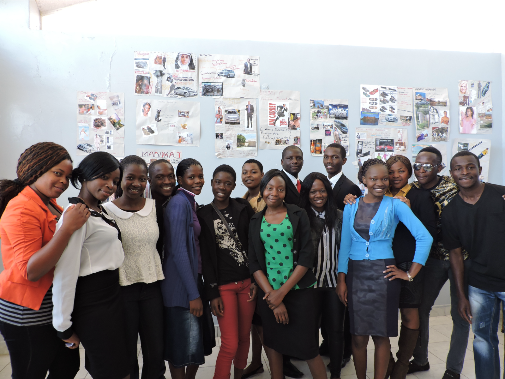
The vision has since grown bigger and morphed into a consequential realization of the futures of many young people across the continent and globally. He points to this recounting recently receiving a message from one of the innovators paNhari mentored. It read “we are still on the path that you prepared for us” from Flint Muchichwa to whom paNhari gave microgrants to boost his innovation.
“If I get testimonials like these in ten years’ time, I will know that I have achieved my vision for Africa. paNhari has come far and our goal is to reach at least 10,000 young people in Africa by 2030. The space belongs to young Africans who critically understand the challenges and potential of the African people.” .
Keeping an organization running for over 15 years is such an awe. Leading perhaps is learning, and one apparent takeaway is how a dependable team can be transformative in evolutionary journeys. Movements are built on mutual trust or otherwise, riding a bike across the winding roads of Cape Town would be the riskiest of compounding ideas to contend with in a day. Having recently moved to South Africa, Donald’s core conviction makes part of paNhari’s vision for Africa’s economic progress. paNhari’s approach is deeply rooted in the belief that African solutions must come from African people, equipped with the right tools and mindsets. But who really defines what is right? The predominant calls for nuanced, systemic thinking and solutions design can only be truly executed through critical, collective consciousness. The leadership model, deeply influenced by African communal values, rejects the notion of leadership as dominance. Instead, paNhari practices what he calls servant leadership that incentivizes shared agencies. It embodies mentorship and coaching that look to uplift and build ingenious spaces by providing guidance and accountability rooted in trust. Transformative leadership is founded on empathy as a core principle, further vividly painted through practice. It is leading from the back, a revolutionary form that acknowledges African communities as valid knowledge holders and reclaims how Africa imagines power and ability. “Our position is to enable young people to be catalysts, but we will all collectively lose it if we do not have young people actively influencing decision-making. Give young people a seat at the table and let them be the co-creators so that we can transform the systems and take leadership on,” he says in closing.
“paNhari’s focus is on African young people. There is so much potential in Africa, and the next couple of years will be definitive, and we must place ourselves in a position of change. I think it starts now. Ethical leadership is one of our areas of focus, and we want to make sure we are moulding the right people, doing it out of passion. Africa needs a revolution.”